Today, Americans are not only living longer — we're also retaining our natural teeth longer than ever before. But this rosy picture isn't free of thorns: Older adults tend to require increasingly complex dental treatments; are often more prone to contracting certain diseases; and sometimes find it
Read more
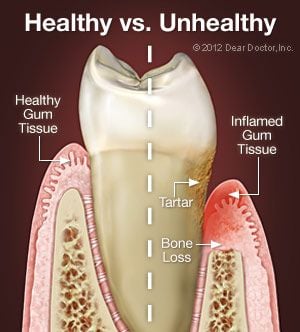 What does the phrase “oral health” mean to you? No new cavities at your dental checkup? That's certainly part of it. But it's really so much more than a lack of tooth decay. Good oral health means a mouth that's free of disease — which can range all the way from mild gingivitis (gum inflammation) to oral cancer; a bite that functions well enough for you to eat without pain and get ample nutrition; and a smile that lets you express your happiest emotions with confidence. Simply put, oral health is a crucial component of your overall health and well-being.
It's important to realize that small — and readily treatable — problems in your mouth can become more complicated, painful and expensive if neglected for too long. Some of these oral health conditions may even have ramifications throughout the whole body. Gingivitis, for example, can sometimes progress to periodontitis — a more serious form of gum disease that can loosen teeth and cause them to fall out. Missing teeth can lead to bone loss in the jaw and inadequate nutrition. And numerous studies have shown that people with severe gum disease may be at increased risk for developing cardiovascular disease. The moral of this story: Routine maintenance can pay off big.
What You Can Do to Stay Healthy
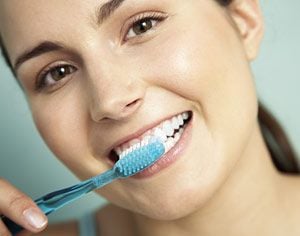 One of the most important things you can do to safeguard your oral health is to maintain a daily oral hygiene routine that effectively removes plaque from your teeth. It's the bacteria that thrive in the plaque biofilm that cause so many oral health problems. Effective oral hygiene involves brushing your teeth twice daily with a fluoride toothpaste and flossing at least once per day to remove plaque from between the teeth.
Nutrition and lifestyle choices also play an important role. You don't have any control over hereditary factors that may predispose you to gum disease — but you do have control over how much sugar you eat and when you eat it; how often you exercise; whether you smoke; and how often you visit the dentist.
How Dentistry Can Help
If you only see a dentist when problems arise, you may be missing out on some important benefits! As doctors who specialize in oral health, dentists offer a wide range of preventive services. At your regular exams, for example, you will be checked for any signs of oral cancer, tooth decay, gum disease, and other oral infections; hard-to-reach deposits from your teeth will be cleaned; and you can get answers to any questions you have on topics ranging from oral hygiene issues to the connection between oral health and systemic diseases.
So please don't wait for a serious problem to come up before you make an appointment at the dental office. Having regular checkups could save you lots of time, aggravation, and cost in the long run. It could even save your teeth! Working together, we can take proactive steps toward a healthy future.
Related Articles
Tooth Decay — A Preventable Disease Tooth decay is the number one reason children and adults lose teeth during their lifetime. Yet many people don't realize that it is a preventable infection. This article explores the causes of tooth decay, its prevention, and the relationship to bacteria, sugars, and acids... Read Article

Dentistry and Oral Health for Children Dear Doctor magazine brings you this wide-ranging overview of milestones and transitions in your child's dental development. Learn how to protect your children from tooth decay, dental injuries, and unhealthy habits while getting them started on the road to a lifetime of oral health and general well-being... Read Article
Understanding Gum (Periodontal) Disease Have your gums ever bled when you brushed or flossed? This most commonly overlooked simple sign may be the start of a silent progressive disease leading to tooth loss. Learn what you can do to prevent this problem and keep your teeth for life... Read Article
-
Aging & Dental Health
Category: Oral Health
-
Antibiotic Premedication for Dental Treatments
Category: Oral Health
Antibiotics are widely prescribed to control bacterial infections. Sometimes they are given before a medical or dental procedure, to prevent a possible infection from occurring; this practice is called “antibiotic prophylaxis.” In the recent past, physicians and dentists advised that people with
Read more -
Bad Breath
Category: Oral Health
Bad Breath, or halitosis, is an embarrassing problem that affects millions. To combat it, many people use breath mints, chewing gum, sprays and mouthwashes. In fact, Americans spend billions of dollars each year on these products — even though they offer only a temporary fix. Getting rid of persistent
Read more -
Blood Pressure Medications & Your Gums
Category: Oral Health
Before prescribing any medications — even lifesaving ones, such as those used to reduce blood pressure or prevent epileptic seizures — your health care professionals carefully weigh the benefits a drug offers against the possible risks of taking it, including its potential side effects. In most cases,
Read more -
Diabetes & Oral Health
Category: Oral Health
Diabetes is a group of chronic inflammatory diseases that affect the body's ability to process sugar. If you have diabetes, it is particularly important to maintain excellent oral health. That's because diabetics are more prone to oral infections such as periodontal (gum) disease, which can result in
Read more -
Dry Mouth
Category: Oral Health
Everybody gets a dry mouth from time to time. Temporary mouth dryness can be brought on by dehydration, stress, or simply the normal reduction in saliva flow at night. But persistent mouth dryness, a condition known as xerostomia, is cause for concern. Xerostomia occurs when your salivary glands, which
Read more -
Eating Disorders & Oral Health
Category: Oral Health
Millions of people in the United States, particularly teenage girls and young women, suffer from health-threatening eating disorders, and dentists are often the first to spot the signs. Why? The repeated, self-induced vomiting that characterizes bulimia nervosa has a pronounced effect on teeth. Anorexia
Read more -
Fluoride
Category: Oral Health
Fluoride is a mineral that is naturally present to some degree in both fresh and salt water sources. Its major dental benefit is that it is readily incorporated into the teeth's mineral structure, thereby making them stronger and more decay-resistant. Fluoride can even reverse tiny cavities that are
Read more -
Geographic Tongue
Category: Oral Health
Geographic tongue is characterized by harmless lesions, or patches, that can suddenly materialize on the tongue's top surface. The condition gets its name from the physical appearance of the lesions, which resemble smooth, red islands, possibly rimmed with white. Their smoothness comes from the absence
Read more -
Nutrition & Oral Health
Category: Oral Health
You probably already realize that maintaining a balanced diet offers a host of benefits to your overall health. But did you know diet also directly affects the health of your teeth and gums? It all starts before birth, as a baby's teeth begin forming in the sixth week of pregnancy and mineralizing in
Read more -
Oral Cancer
Category: Oral Health
Cancer is a scary word, but the more you know about it, the better able you will be to protect yourself and the ones you love. This is particularly true of oral cancer, which is very treatable if caught early. Unfortunately, about two-thirds of oral cancers are not caught until the late stages. You may
Read more -
Oral Piercings
Category: Oral Health
At the present time, oral piercings such as tongue bolts, cheek studs, and lip rings seem to be in vogue among a certain number of young people. Whether you find these bodily adornments appealing or repulsive is a matter of personal taste — but whichever side of the fashion divide you're on, there
Read more -
Osteoporosis & Oral Health
Category: Oral Health
Osteoporosis is a condition that weakens bones and makes them more prone to fracture. Estimated to affect about 10 million Americans at present, it causes some 2 million fractures each year — and as our population ages, these numbers are expected to increase. Osteoporosis can affect any part of the
Read more -
Pregnancy, Hormones & Oral Health
Category: Oral Health
You probably know that many physical and emotional changes you will experience during pregnancy result from an increase in the levels of certain hormones — the chemicals that regulate many important processes in the body. But what you may not realize is that these hormonal variations can affect your
Read more -
Preventive Dentistry
Category: Oral Health
You've no doubt heard it said that an ounce of prevention is worth a pound of cure. In dentistry, you might say it's worth two pounds. Maybe even thousands of dollars. That's because dental problems can become exponentially more expensive — and painful — the longer they go unaddressed. Fortunately,
Read more -
Professional Teeth Cleanings
Category: Oral Health
Even if you brush and floss your teeth faithfully, it is important that you have your teeth professionally cleaned on a regular basis. (Of course, if you aren't quite so meticulous about your oral hygiene, it's even more important!) After a thorough cleaning, your teeth will feel smooth and squeaky-clean,
Read more -
Stress & Oral Health
Category: Oral Health
Teeth grinding and clenching are common habits, but that doesn't mean they are harmless. Stresses from the powerful forces generated by grinding and clenching (also known as “bruxing”) can wear down teeth or even loosen them. Teeth that have enamel worn away or scraped off from this repeated rubbing
Read more
Contact Us
Send Us an Email
Our Location
Find us on the map
Hours of Operation
Our Regular Schedule
Monday:
9:00 am-5:00 pm
Tuesday:
9:00 am-5:00 pm
Wednesday:
9:00 am-5:00 pm
Thursday:
9:00 am-5:00 pm
Friday:
Closed
Saturday:
Closed
Sunday:
Closed